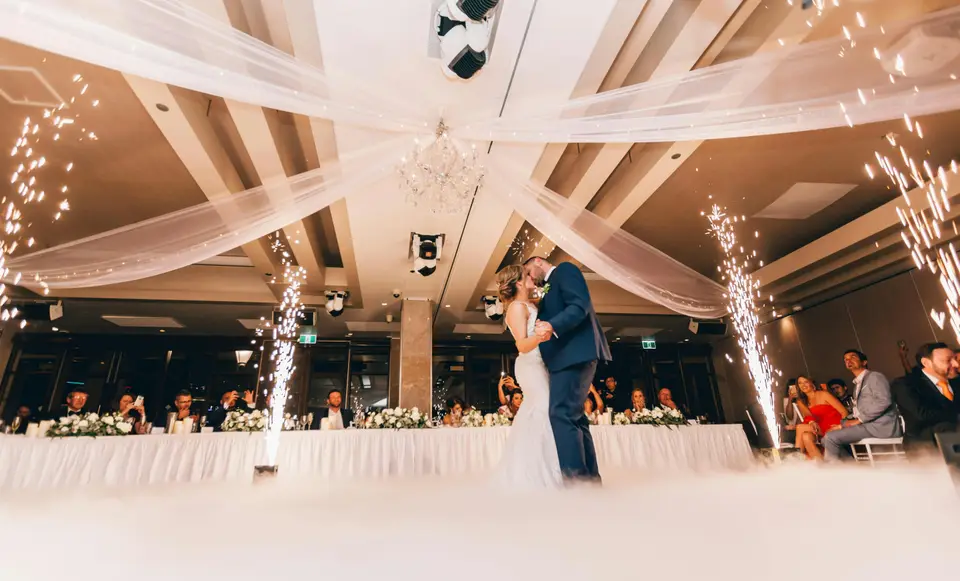
What Does a Wedding Reception Timeline Look Like, Hour by Hour?
Most wedding receptions follow the same shape: about an hour of cocktails, a grand entrance, welcome and toasts, dinner, the special dances, then open dancing until a last song and send-off. Exact times depend on your venue's end time. Your DJ and MC keep each moment on cue so the night flows without anyone checking a clock.
Below is the order of events we see work again and again, a sample hour-by-hour schedule you can borrow, and the questions worth answering before you hand your timeline to your DJ. If you are still at the stage of wondering what a DJ even handles on the day, that is a good place to start too.
What is the usual order of events at a wedding reception?
Every couple tweaks it, but the backbone looks like this:
- Cocktail hour. Guests mingle, grab a drink and find their seats while you take photos.
- Guests seated. The MC invites everyone into the reception room a few minutes before the entrance.
- Grand entrance. The wedding party, then the two of you, are introduced.
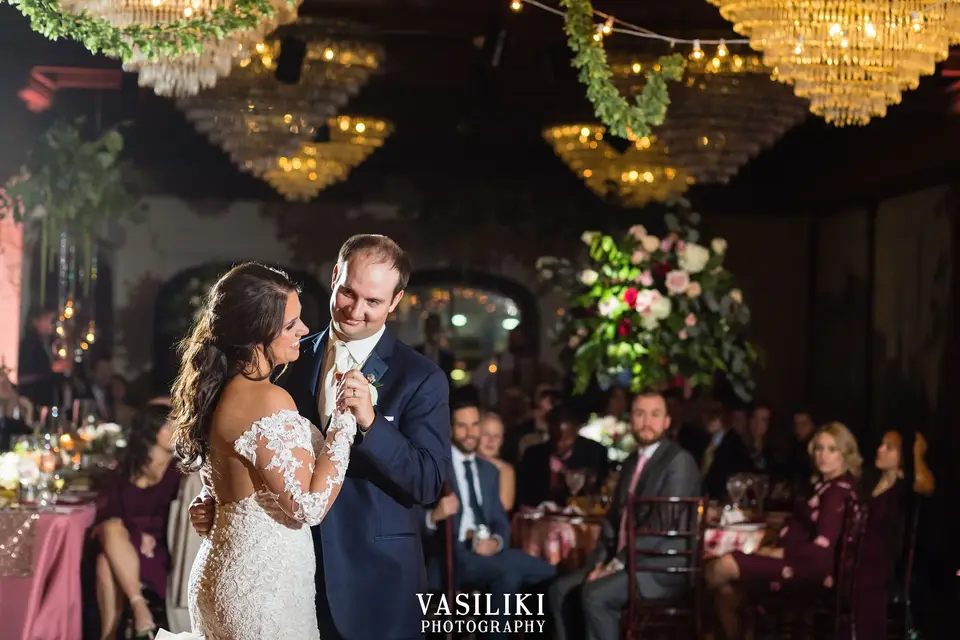
- First dance. Many couples go straight from the entrance into the first dance while everyone is already watching.
- Welcome and blessing. A short welcome from a parent or host, and a blessing if you are having one.
- Dinner. Soft music while people eat and talk.
- Toasts. Usually the maid of honor and best man, either before dinner or between courses.
- Parent dances. Father and daughter, mother and son, or whatever fits your family.
- Open dancing. The longest stretch of the night.
- Cake cutting. Often placed between dance sets to give the floor a short breather.
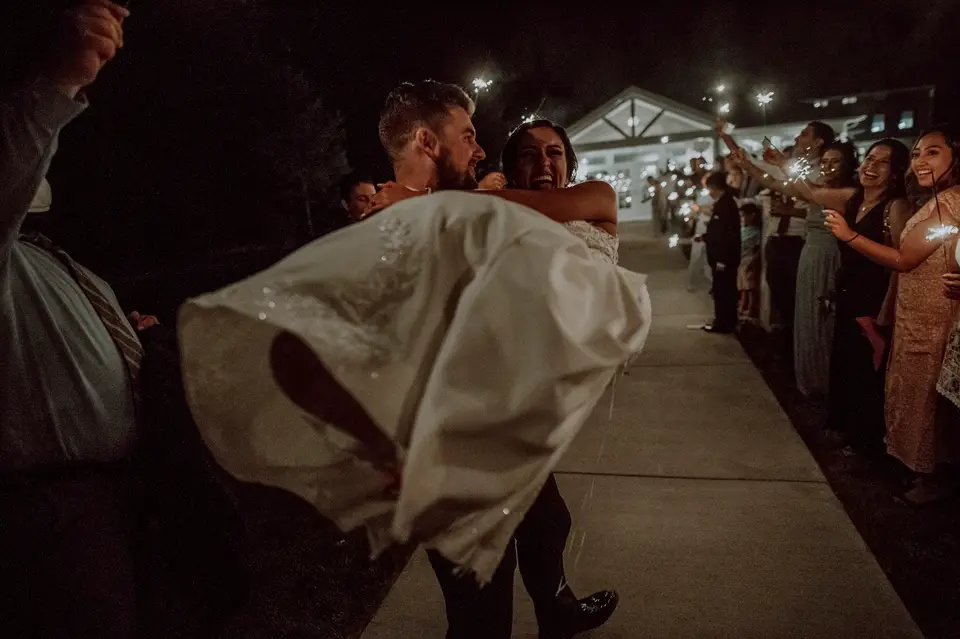
- Last song and send-off. One final song, then sparklers, bubbles or a simple exit.
None of this is a rule. Plenty of couples skip the bouquet toss, move toasts to the rehearsal dinner, or hold the first dance until after dinner. The order matters less than making sure everyone involved knows it.
A sample wedding reception timeline, hour by hour
Here is a sample for a 6:00 PM ceremony with an 11:00 PM venue end time. Treat the minutes as a starting point, not a promise, and slide everything to match your own day.
| Time | Moment | What your DJ and MC is doing |
|---|---|---|
| 6:00 PM | Ceremony | Prelude, processional, recessional music and microphones for the officiant and readers |
| 6:30 PM | Cocktail hour | Relaxed background music that still sounds like a party is coming |
| 7:25 PM | Guests seated | Announcement inviting guests into the reception room |
| 7:35 PM | Grand entrance and first dance | Introductions with your entrance song, then straight into your first dance |
| 7:45 PM | Welcome and blessing | Handing off the microphone and keeping it short and audible |
| 7:50 PM | Dinner service | Softer dinner music, checking in with the caterer on timing |
| 8:30 PM | Toasts | Introducing each speaker and cueing any song tied to a toast |
| 8:45 PM | Parent dances | Announcing each dance and inviting family to join halfway, if you want that |
| 8:55 PM | Open dancing | Reading the room and mixing in your must-play songs |
| 9:45 PM | Cake cutting | A quick announcement and a fun song, then back to dancing |
| 10:50 PM | Last song | Gathering everyone for one final song |
| 11:00 PM | Send-off | Sending guests outside first so they are lined up for your exit |
Notice that open dancing gets two big blocks. That is on purpose. Formalities stacked back to back can stall a room, while a dance floor that is already full is easy to keep full.
How long is a typical wedding reception?
The sample above runs about five hours from cocktail hour to send-off, and many couples plan something close to that. The real limit is usually your venue contract, though. Before you build anything, find out three times from your venue: when you can start setting up, when music has to stop, and when everyone has to be out. Work backward from the music stop time, not forward from the ceremony.
A few things quietly eat time:
- Photos between the ceremony and the reception, especially family groupings.
- Buffet or stations, which often take longer than a plated meal for a big guest list.
- Toasts that run long. A friendly heads-up to your speakers about length helps more than you might think.
- A late ceremony start. Building in ten spare minutes before the entrance keeps the whole night from sliding.
When should toasts, dances and cake cutting happen?
There is no single right answer, so ask yourselves what you want the room to feel like at each moment.
Toasts work well right after the entrance, when guests are seated and paying attention, or between dinner courses. Toasts at the very end of dinner can work too, as long as they are not pushing open dancing late into the night.
The first dance straight after the entrance is popular because everyone is already looking at you and the energy is high. If you are nervous about it, getting it done early can also let you relax and enjoy dinner. Still choosing a song? Our guide on how to pick your first dance song walks through it.
Parent dances fit nicely right before open dancing, because inviting everyone to join at the end of the song becomes the natural start of the party. If you need ideas, see our lists of father daughter dance songs.
Cake cutting is a good reset between dance sets. It also gives your photographer a clean moment and lets the caterer start serving dessert while people are still on their feet.
How do sunset and the season change a Maryland timeline?
Sunset moves a lot in Maryland. In Baltimore the latest sunset of the year is about 8:37 PM in late June and the earliest is about 4:43 PM in early December, according to sunrise-sunset.org. That swing changes where golden hour photos land.
- Summer weddings often slip out for sunset photos during dinner or right after the toasts. Tell your DJ so dinner music keeps going and nothing big is scheduled while you are outside.
- Fall and winter weddings may have golden hour before the ceremony, so first-look photos can free up cocktail hour for you to actually join your guests.
- Waterfront and tented venues around the Bay can get windy or cool once the sun drops. Plan outdoor moments, like the send-off, with that in mind.
What should you give your DJ and MC before the wedding?
The more your DJ knows ahead of time, the less you have to think about on the day. At Maryland's DJ, couples plan through our online planning portal and as many planning sessions as they want, and the DJ arrives early so everything is set before guests walk in. Wherever you book, these are the details worth sharing:
- Your timeline with the venue's start, music stop and end times.
- The names of everyone being introduced, written out the way they should be said out loud, and the order they walk in.
- Songs for each key moment: entrance, first dance, parent dances, cake cutting and last song.
- Who is giving toasts or a blessing, and whether they need a wireless microphone.
- Your must-play songs and a list of songs you never want to hear. Here is how to build a do not play list.
- Venue and vendor contacts: your coordinator, photographer and caterer, so the DJ can sync cues with them.
- Any extras with their own timing, like a photo booth during cocktail hour or a reveal of lighting for the first dance.
Who keeps the reception on schedule?
Usually it is a team. Your venue coordinator or planner runs the overall day, the caterer runs the food, and your DJ and MC runs everything with a microphone: announcements, introductions, toasts and dances. Our wedding DJs handle every formality and announcement, and we keep it classy rather than cheesy.
The handoff that matters most is between the MC and the kitchen. A good MC checks with the caterer before calling the entrance or the toasts, so food does not sit and speeches do not happen over clattering plates. If you do not have a planner, ask your DJ how they coordinate with the other vendors you have hired.
Ceremony music is its own planning conversation. For that part of the day, see choosing pre-ceremony music.
A quick checklist before you lock your timeline
- Have you confirmed the venue's music stop time in writing?
- Does every vendor have the same version of the timeline?
- Do your toast givers know when they are speaking and roughly how long?
- Is there a spare ten minutes before the grand entrance?
- Have you decided what happens if it rains on any outdoor moment?
- Do you know who will cue the send-off and where guests should line up?
If you are planning a Maryland wedding and want to talk through your own timeline, our wedding DJ team is happy to look at it with you, even if you are still deciding what you need.
Wedding reception timeline questions
How long is a typical wedding reception?
Many couples plan around four to five hours from cocktail hour to send-off, but the real limit is usually your venue contract. Confirm when music has to stop and plan backward from that time.
Should the first dance happen right after the grand entrance?
It often works well, because guests are already watching and the energy is high. Some couples prefer to dance after dinner instead. Either is fine as long as your DJ and photographer know the plan.
When should wedding toasts happen?
Toasts usually go right after the entrance or between dinner courses, when guests are seated and listening. Avoid placing them so late that they push back open dancing.
Who runs the wedding reception timeline?
Your venue coordinator or planner runs the overall day, and your DJ and MC runs the moments with a microphone: introductions, toasts, dances and announcements. The MC should check with the caterer before each big moment.
What does the DJ need to know before the wedding?
Share your timeline, the venue's music stop time, the names and order of everyone being introduced, songs for each key moment, who is speaking, your must-play and do not play songs, and your other vendors' contacts.
Keep reading: February Wedding and Event Trends to Watch · Why January Is the Best Time to Book Your DJ · Corporate Event Trends to Watch in 2026

Published on:
Tuesday, October 27, 2026